Eight Types of MUDA: Practical Guide to Eliminating Waste
What is MUDA in Lean Manufacturing?
Lean Manufacturing is a comprehensive management philosophy originating from the Toyota Production System (TPS), focusing on maximizing customer value while minimizing waste. MUDA, a Japanese term meaning waste or unnecessary action, refers to any activities, processes, or resources that consume time, materials, or energy without adding customer value – its identification and elimination form a core pillar of Lean philosophy.
Eliminating MUDA boosts efficiency by cutting costs and shortening production cycles.
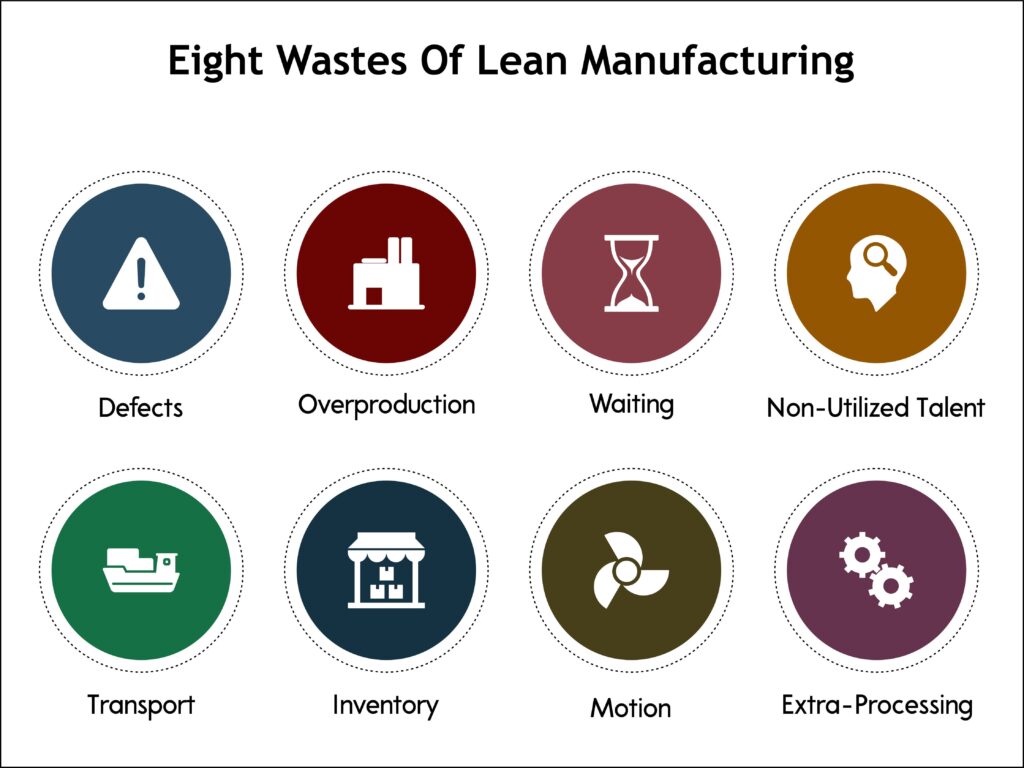
MUDA stands as one of Lean’s three pillars (alongside Mura – unevenness and Muri – overburden), traditionally classified into seven types: overproduction, inventory, waiting, transportation, excess motion, overprocessing, and defects. Today, an eighth category often supplements these: underutilized employee skills and creativity.
- Overproduction
This is one of the most serious types of waste. It occurs when we produce more, faster, or earlier than required by the next process step or the end customer.
Examples:
- Production to stock without a specific order
- Manufacturing larger batches than the customer requires
- Performing operations too early relative to the schedule
Consequences: Overproduction leads to excessive inventories, requires additional storage space, generates transportation and warehousing costs, increases the risk of product damage, and masks other issues in the production process. Products may become outdated or expire before finding a buyer.
How to Eliminate: Implement a pull production system, manufacture in smaller batches, synchronize production with actual demand, and apply Kanban systems.
- Waiting
Waste of time occurs when workers, machines, or materials remain idle, waiting for the next step in the process.
Examples:
- Machines waiting for materials or tools
- Workers waiting for information, documentation, or decisions
- Semi-finished products waiting in queues between workstations
- Downtime caused by machine breakdowns or defective production
Consequences: Waiting extends order fulfillment times, leads to inefficient use of human and machine resources, causes employee frustration, results in delivery delays, and increases operational costs.
How to Eliminate: Balance workstation workloads, synchronize processes, ensure continuous material supply, implement rapid changeovers (SMED), and apply preventive maintenance programs for machines (TPM).
- Transportation
Unnecessary movement of materials, products, or information that does not add value to the final product.
Examples:
- Multiple transfers of materials between warehouses
- Suboptimal workstation layouts requiring long transports
- Unnecessary movement of products to temporary storage locations
Consequences: Unnecessary transportation increases internal transport costs, raises the risk of product damage during movement, extends lead times, and requires additional personnel and equipment for handling transport.
How to Eliminate: Reorganize workstation layouts according to flow principles, minimize distances between consecutive operations, centralize warehouses, and implement automated transport systems where justified.
- Over-processing
Performing work not required by the customer or using more complex processes than necessary.
Examples:
- Applying overly precise tolerances where not required
- Adding product features the customer does not need
- Conducting multiple quality checks on the same element
- Using expensive materials or processes when cheaper alternatives would suffice
- Generating excessive documentation
Consequences: Unnecessary processing raises production costs without corresponding value increase for the customer, extends lead times, consumes more expensive resources, and complicates processes.
How to Eliminate: Precisely define customer requirements, standardize processes, analyze the value added by each operation, optimize processes, and align quality standards with product specifications and customer requirements.
- Inventory
Accumulating larger quantities of raw materials, semi-finished products, or finished goods than necessary for efficient production operations.
Examples:
- Warehouses full of slow-moving materials
- Large work-in-progress inventories between operations
- Excessive material orders and safety stocks resulting from poor process quality, performance, and efficiency
Consequences: Excess inventory ties up capital in stocks, incurs storage and handling costs, creates risks of product obsolescence or deterioration, masks quality and process issues, and requires larger warehouse space.
How to Eliminate: Implement Just-in-Time (JIT) systems, build trusted supplier relationships, shorten delivery times, produce in smaller batches, and improve process predictability and efficiency.
- Motion
Unnecessary movement by workers or non-ergonomic performance of operations that do not add value.
Examples:
- Reaching for tools or materials placed in inconvenient locations
- Unnecessary movement by personnel or operators searching for information, tools, or materials
- Poor ergonomics of workstations
- Redundant, repetitive movements that could be optimized or eliminated
Consequences: Unnecessary movement causes worker fatigue, increases the risk of injuries and occupational illnesses, lowers productivity, extends operation times, and leads to team frustration.
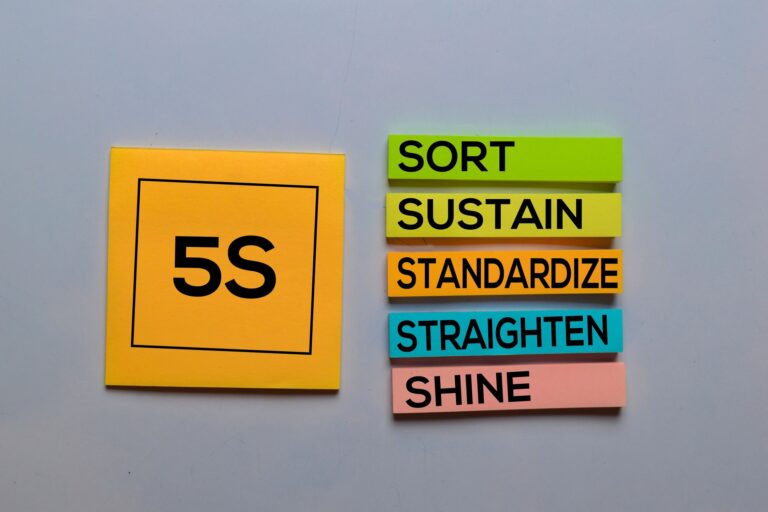
How to Eliminate: Apply ergonomics principles, implement the 5S system, optimize workstation layouts, analyze movements using MTM (Methods-Time Measurement), and position tools and materials within the operator’s reach.
- Defects
Production of defective products requiring repair, rework, or scrapping.
Examples:
- Products non-conforming to specifications
- Errors requiring rework
- Damage occurring during production or transport
- Customer complaints
Consequences: Defects result in wasted materials and labor costs on faulty products, repair and rework expenses, delivery delays, customer dissatisfaction, reputational damage, and additional quality control requirements.
How to Eliminate: Build quality into the product (build-in quality), implement DFMEA/PFMEA and Poka-Yoke systems, perform quality control at the source, conduct root cause analysis (5 Why, Ishikawa analysis), standardize work, train employees, and improve processes.
- Eighth Muda: Unused employee skills and creativity.
n contemporary Lean practices, an eighth category is often added to the seven classic Mudas: waste of human potential. This involves failing to utilize employees’ creativity, knowledge, skills, and ideas.
Examples:
- Ignoring employee suggestions for improvements
- Assigning tasks below employees’ competency levels
- Lack of training and staff development
- Hierarchical structures blocking initiative
How to Eliminate: Implement continuous improvement programs engaging all employees, idea submission systems, training and competency development, and delegation of responsibility.